The many faces of fiduciary management (roundtable ‘Fiduciary Management in 2030’ – part 1)
This report was originally written in Dutch. This is an English translation.
What exactly is fiduciary management? In part 1 of the roundtable report on Fiduciary Management in 2030, participants discuss definitions, roles and models – from strategic advice to implementation – and show how governance, scale and the choices made by pension funds determine how fiduciary management is implemented in the Netherlands.
By Hans Amesz
This is part 1 of the report. Part 2 will be published on Thursday 12 March and part 3 on Monday 16 March.
|
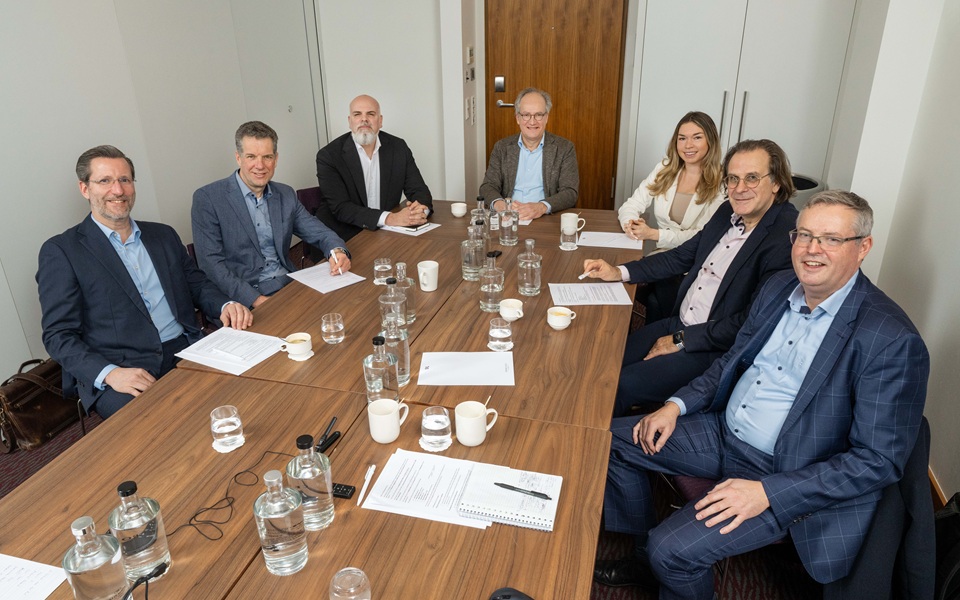
CHAIR: Jeroen van der Put, various pension funds PARTICIPANTS: Janwillem Engel, Montae & Partners Jasper Haak, AF Advisors Carl Kool, BlackRock Marit Kosmeijer, Sprenkels Daniël Rijs, DPS Marcel Roberts, SPMS Alfred Slager, Vrije Universiteit Amsterdam |
What is the definition of fiduciary management?
Marcel Roberts: ‘It is difficult to formulate a clear-cut definition of fiduciary management. There are narrow and broad definitions. The narrow definition focuses mainly on manager selection and some advice on strategic policy. The broad definition actually encompasses the role of implementation manager, plus all those other aspects. LDI is often part of fiduciary management, even though it is essentially a mandate. ESG advice may be included, but it doesn't have to be. I think everyone has their own, different definition.’
Marit Kosmeijer: ‘Ultimately, it comes down to asset management and, to a greater or lesser extent, advice, execution and strategic advice. This varies from simply executing the asset owner's instructions to a far-reaching discretionary mandate, including comprehensive advice and regulatory compliance, etc. So there are many different flavours.’
Jasper Haak: ‘The core is investment advice and, nowadays, ESG advice. Then comes the part about manager selection, operational asset management – in fact, coordinating the entire portfolio, also known as balance sheet management – and finally the LDI part, which may or may not be considered an integral part of this.’
Alfred Slager: ‘We should really stop using the term fiduciary management. When I hear ‘fiduciary’, I think of someone who takes over complete management and makes decisions for the fund in good faith. The term has not covered the scope since 2010. We are talking about the implementation and coordination of asset management: selecting investments, monitoring the entire balance sheet, and reporting to see whether everything is on track and whether adjustments need to be made by the client, the fund.’
Carl Kool: ‘Fiduciary usually includes strategic asset allocation, policy-related matters such as liquidity policy, sustainability, matters such as selection, monitoring and deselection of managers, and reporting and evaluation. It depends very much on the client, though. Some clients say: we want all those aspects, but we will select the managers ourselves, or we will hire another party to do so. There are sub-components that can indeed be carried out by an external party. We have deliberately chosen to have the ALM component carried out by an external party, for example. The governance aspect is an important element in this. As a fiduciary manager, you can work with an ALM advisor. We also like to contribute ideas and are involved in certain aspects, such as formulating expected returns, risks and economic scenarios.’
Daniël Rijs: ‘You can ask yourself how many of the different modules you want to purchase. If you have all these blocks in one hand as a fiduciary, internal coordination is optimal and the lines of communication are short and efficient. But this does create tension with regard to responsibilities and how independent you can be with your advice. You can safeguard this by carefully designing processes and separating functions.’
Kosmeijer: ‘Fundamentally, there are the investment principles. A fiduciary manager can help with this, but ultimately they are the responsibility of the board. Then you move on to investment propositions, etc., and finally reporting. I think ALM is roughly in the middle of this whole process.’
There are various fiduciary models, ranging from doing everything to performing specific tasks. How do you see this in the Netherlands?
Roberts: ‘If you have an implementing organisation, it is very easy to work in a modular way, because you can coordinate with your administrative office. If you don't have an implementing organisation, working in a modular way is really complicated.’
Janwillem Engel: ‘That is also where the difference between smaller and larger pension funds lies. Large funds have the budget to arrange things in a modular way. With commercial parties that enter the market to serve multiple pension funds, you do see that there is a dependence on the size of the client. They want to do everything for small clients, while for large clients they are more willing to offer fiduciary activities on a modular basis.’
Kosmeijer: ‘We act as a countervailing power. We do not manage assets or select managers, but we do provide strategic advice to pension fund boards and investment committees. This allows us to see the different fiduciary managers and compare them.’
Haak: ‘Which modules are created depends in part on what the pension fund wants, but also in part on what the fiduciary manager offers.’
Kool: ‘I agree. The key message is that there is no one-size-fits-all solution. It really depends on the client's wishes and the specific requirements they have for a fiduciary manager.’
Engel: ‘It starts with a governance discussion. As a board, how do you think the asset management process should be organised? Which parts do you want to do yourself, through your administrative office or investment committee, and for which do you want to have an independent advisor? What should the fiduciary manager do? Choices have to be made, and for that it is important that the administrative principles are properly established.’
Kool: ‘You see that pension funds are becoming more open again, for example in the area of private markets, to allowing the fiduciary manager to play a role in this if they have the necessary expertise. That is not a given, but it is a trend that is emerging.’
Kosmeijer: ‘A fiduciary manager often also has an almost educational role in providing pension fund directors with knowledge about, for example, more exotic investment categories. It is therefore logical that more attention is paid to the fiduciary and less to internal or even external advisers.’
Roberts: ‘My biggest concern is the remuneration for the fiduciary, because we don't want to pay for fiduciary services. That may also be the reason why we are allowing asset management again, because it allows the fiduciary manager to earn some money. That is a bad development. We simply have to pay for fiduciary advice.’
Slager: 'I would approach it differently. It's not about which fiduciary models there are, but about the management models of funds, into which a fiduciary must fit as well as possible. And there is a lot of variation possible there. One example is a medium-sized fund that argues that, if you want to do it right, you should not outsource the important choices in alternative investments, but take them on with an advisory fiduciary. Whereas the same fund has engaged a different fiduciary for the selection and implementation of LDI, where costs and efficiency are key.’
What are the drivers for choosing a particular model?
Haak: ‘Partly, it’s the scheme. I think there will also be differences between flexible contribution schemes (FPR) and solidarity contribution schemes (SPR), or closed funds. For many pension funds, the past also determines to some extent how they have structured the future. You see this in both large and small funds. In addition, there are certain preferences within boards.’
Kosmeijer: ‘I agree. The past and individual directors play an important role. I think costs also play a role. Of course, for funds without fiduciary management, the question arises as to whether this should be introduced at some point, because otherwise it becomes too complex. But then there is the fear of additional costs.’
|
Jeroen van der Put Jeroen van der Put is a director at various pension funds, including Centraal Beheer APF. He is also chairman of the board of the VBDO, advisor to investment committees and advisor to the Pension Funds Code Monitoring Committee. Previously, he held various management and supervisory roles at pension funds, healthcare institutions and investment organisations, and was chairman of the risk management committee of the Pension Federation. |
|
Janwillem Engel Janwillem Engel has been Lead Investment Consultant at Montae & Partners since 2016, where his responsibilities include assisting pension funds in the selection and evaluation of fiduciary managers, keeping track of developments in the fiduciary market, and maintaining contacts with providers of these services. Engel is a qualified industrial engineer and previously worked for 15 years as a Strategic Advisor at Cardano. |
|
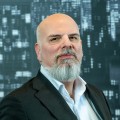
Jasper Haak Jasper Haak is Managing Partner at AF Advisors. After holding management positions at Robeco, he has been advising senior management in the financial sector since 2008. He combines strategic insight with in-depth knowledge of financial markets. Haak holds an MBA from London Business School, is a CAIA charterholder and a certified Financial Risk Manager. |
|
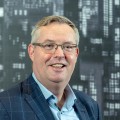
Carl Kool Carl Kool is Head of Fiduciary Management Netherlands at BlackRock, where he has been working since 2011. Prior to that, he was Head of Strategy & Research at Doctors Pension Funds Services (DPFS). He previously worked at ING and Robeco/IRIS, among others. Kool graduated in Economics from Erasmus University Rotterdam and is a CFA charterholder. |
|
Marit Kosmeijer Marit Kosmeijer is Director of Investments and Actuarial Services at Sprenkels. She first joined Sprenkels in 2018 and, after spending several years in the private equity sector, returned in 2023. Kosmeijer is an advisory actuary, investment advisor and pension transition advisor. She is an Actuary AG (AAG) and studied Financial Econometrics at VU University Amsterdam. |

|
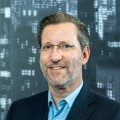
Daniël Rijs Daniël Rijs is Senior Investment Manager at pension administrator DPS. Since 2012, he has been jointly responsible for strategic policy advice on investment policy. He has nearly 30 years of experience in institutional portfolio management and fiduciary management. Rijs studied Econometrics in Tilburg and joined DPS in 1997 as Fixed Income Portfolio Manager and ALM Advisor. |
|
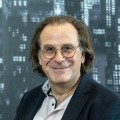
Marcel Roberts Marcel Roberts is an experienced Chief Investment Officer with more than 25 years of experience in institutional asset management. He has held and continues to hold various roles as CIO, chairman and member of investment and review committees at pension funds. His expertise lies in strategic investment policy, asset allocation, risk management and governance within complex pension organisations. |
|
Alfred Slager Alfred Slager is Professor of Institutional Investments at VU University Amsterdam and a non-executive director at pension fund ABP. He is also a member of various investment (advisory) committees. In previous roles, he was a director, investment strategist and asset manager. His publications cover topics such as investment governance, long-term investing and sustainability. |
Read the original report in Financial Investigator magazine