Valentijn van Nieuwenhuijzen: Europe’s awakening
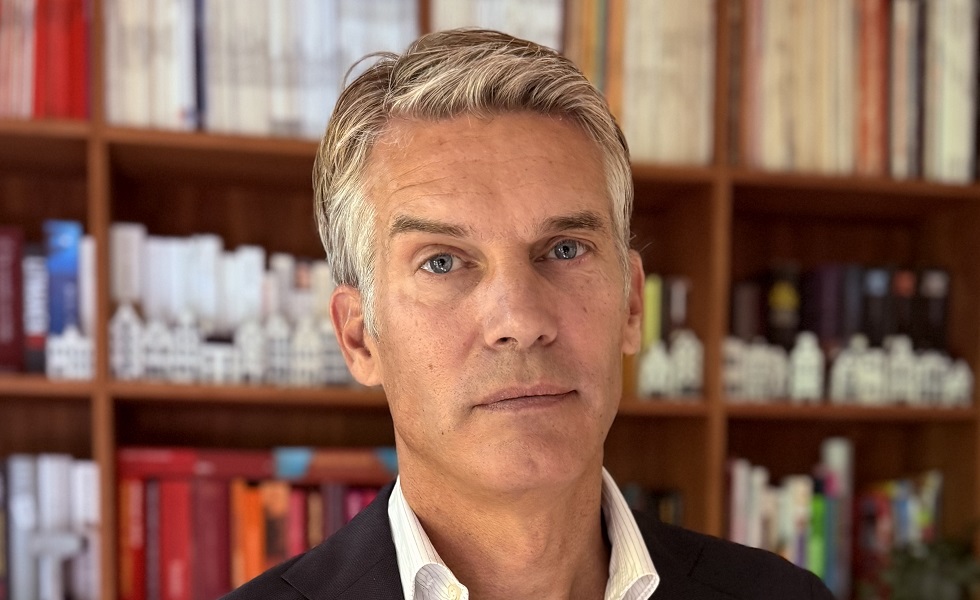
By Valentijn van Nieuwenhuijzen, Investment Strategist and former CIO of NN Investment Partners/Goldman Sachs Asset Management
Europe is its own harshest critic. We constantly tell ourselves that we are too slow, too bureaucratic and too divided. We look outwards for leadership and inwards for problems. This creates the image of a rudderless continent, dependent on the US for security and technology, whilst China gains ground economically.
But what if this self-defeating mindset is the very thing holding Europe back? Many are overlooking that Europe still is a sleeping giant and that its geopolitical, energy and technological challenges actually offer an unprecedented opportunity to awaken. What makes this moment especially remarkable is the alignment of strategic incentives for change. Economic competitiveness, geopolitical security, energy independence and sustainability are no longer competing priorities as they are increasingly reinforcing each other.
Nowhere is this clearer than in energy. Europe’s dependence on imported fossil fuels has long been a structural weakness, translating into higher costs, lower competitiveness and exposure to geopolitical leverage. Recent crises have only reinforced that reality. Still, the solution is increasingly within reach. Europe’s renewable potential is vast with wind in the northwest, hydropower in Scandinavia, solar in the south and nuclear in France. The problem isn’t a lack of resources but a lack of infrastructure: the grids, storage, and cross-border connections needed to turn potential into power. This is not a technological challenge. It is an investment challenge, and the capital to solve it already exists. Homegrown energy would reduce dependency to volatile fossil fuel markets, help reduce climate risks, slash industrial costs and turn a structural weakness into a competitive edge.
Digital sovereignty offers another path to strategic power. Europe may not build the most advanced AI models, but it doesn’t need to. The real economic value lies in applying technology to drive productivity, ensure data security, and create a trusted digital ecosystem. By leveraging foreign innovation while maintaining strict control over data and infrastructure, Europe can carve out a niche as the world’s most reliable, privacy-focused digital economy. Being open-minded and creating a digital safe place to experiment will also foster innovation.
The financial system should also evolve. Europe saves more than it invests, around 2-3% of GDP or around € 350 billion annually, but capital struggles to flow toward its most productive uses. It holds vast pools of long-term capital, particularly in pension funds and insurance balance sheets, but regulatory frameworks have historically steered this capital toward low-risk, low-impact assets rather than productive investment in innovation and renewable and digital infrastructure. Streamlining regulation to favour risk capital, like equity, venture capital and private markets is an obvious and feasible step forward.
This shift also requires a rethinking of the role of government. Europe has traditionally been cautious in using public balance sheets to catalyse private investment, but in a world of structural transformation that caution is becoming a constraint. Public-private partnerships, where governments invest alongside private capital and share in both risk and return, offer a powerful model. They reduce uncertainty for investors while ensuring that the broader public benefits also from successful investments. At the same time, fiscal frameworks need to evolve. Investment in infrastructure, energy systems and digital capacity is not consumption, it is the foundation of future growth and should be treated as such.
At the same time, internal frictions continue to undermine Europe’s potential. Despite decades of integration, the single market remains incomplete, with differences in regulation, taxation and standards acting as hidden barriers to trade and investment within Europe itself. Internal market barriers, as the IMF and ECB have shown, act like tariffs and costs that, if removed, could boost productivity significantly.
Then there’s trade. While the US retreats into protectionism, Europe has quietly been expanding its horizons, finalizing deals with Australia, India, Indonesia, and the Mercosur bloc, representing over 2 billion consumers in total. In a world fragmenting into economic blocs, Europe’s commitment to openness could become its greatest strategic asset. Open trade isn’t naivety, but a recognition that interdependence can be a source of strength rather than vulnerability.
Europe’s strength has always been its ability to turn crises into catalysts. The EU itself was born from the ruins of World War II, the euro from monetary chaos, and the banking union from financial instability. Today’s energy shocks, geopolitical tensions, and technological shifts are no different. They are a clear call to action.
The incentives on economic, geopolitical, security and environmental matters are aligning as never before. Cheaper energy, strategic autonomy, and a resilient digital economy are not competing goals, but they reinforce one another. The capital is available, the plans are on the table, and the need is urgent. The only question is whether Europe will seize this moment. What it needs now is the confidence to stop looking up to others and start looking inward, to its own strengths, its own solutions, and its own future. The sleeping giant doesn’t need to catch up. It needs to wake up.
And if it stays awake, the coming decade may not be defined by Europe’s decline, but by its reinvention as a more independent, innovative and globally relevant economic superpower.