Charles Bean: Donald Trump is playing a dangerous game
This interview was originally written in Dutch. This is an English translation.
US President Donald Trump is playing a dangerous game with his attempt to drive down interest rates. The dollar’s reputation as a global reserve currency is at stake. No one knows exactly how this will turn out, but there is good reason for concern.
By Joost van Mierlo
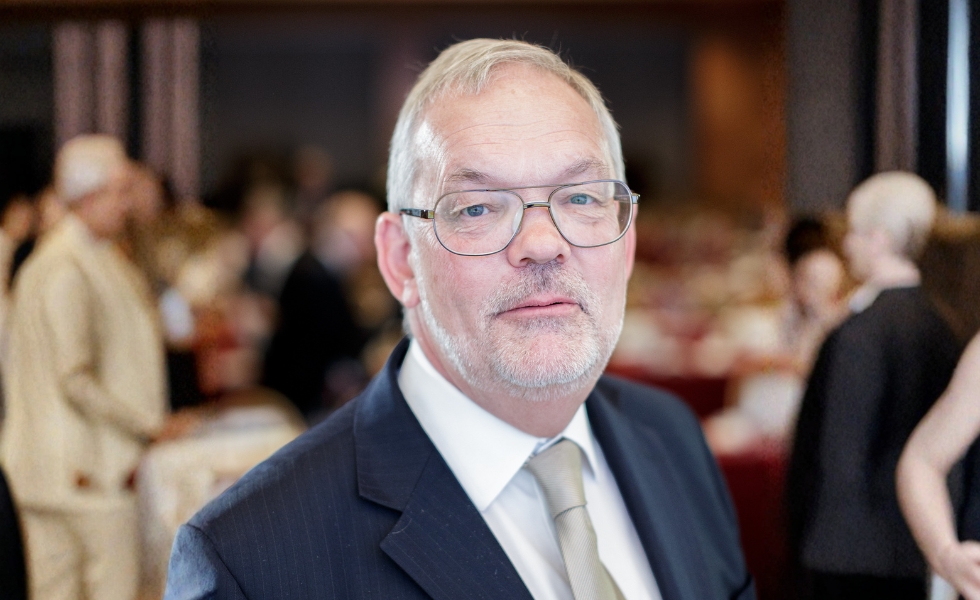
These are the words of Charles Bean. He served on the Executive Board of the Bank of England from 2000 to 2014 and, as an emeritus professor at the London School of Economics, plays a key role in the debate on contemporary monetary policy.
When he joined the Bank of England, the independence of this central bank had only been guaranteed a few years earlier by the then Labour government under Prime Minister Tony Blair. Nowadays, it is mainly in the United States that the foundations of the independent central bank are being undermined.
According to Bean, the proposed appointment of Kevin Warsh as the new chairman of the US Federal Reserve represents the selection of the ‘best available candidate’. But as far as he is concerned, that does not mean that all danger regarding the maintenance of central bank independence has been averted.
First, the current situation. What does the war in Iran mean for central banks?
‘The rise in oil and gas prices comes at a particularly inopportune moment, just as central banks thought the upward pressure on inflation following the Russian invasion of Ukraine had finally subsided. These are difficult trade-offs for central banks. Higher oil and gas prices lead to higher inflation, but at the same time they dampen economic growth. The ultimate consequences depend on the duration of the conflict and the time needed to normalise the supply of oil and gas. It is impossible to predict that accurately.’
Apart from the war, how do you look back on the past year?
‘It has been a period in which political developments were probably more significant than economic developments. I am referring in particular to the use of import tariffs and their economic consequences. Import tariffs are a political instrument because President Trump uses them as a weapon to force negotiations. The tariffs that were ultimately implemented are only half of what was originally announced. One could say that this happened on the basis of, for example, promises to invest more in the United States, but the question is whether these will actually materialise.’
The tariffs have been halved, but they are still causing unrest in the markets and damaging trade. Who is paying the price?
‘In American politics and among the American people, it is becoming increasingly clear that it is the Americans themselves who are bearing the brunt of the tariffs. Of course, it is true that part of the cost of the higher tariffs is passed on, but empirical evidence suggests that 90% of the tariff increase falls on the shoulders of the American consumer. This is, of course, offset by rising revenues for the US government. However, these are being used to cut taxes for high earners in the US. That has political consequences. You can already see this in a shift in the momentum surrounding the upcoming mid-term elections in the autumn.’
Kevin Warsh is someone who lets economic arguments be the deciding factor and will not bow to the wishes of politicians.
The US budget deficit just keeps rising. Surely that must be a cause for concern for the central banker in you?
‘Even before Trump took office last year, it was already clear that the budget deficit in the United States was unsustainable. A correction was needed. The Trump administration paid no heed to this. By passing the “Big Beautiful Bill”, these concerns have been ignored, making them all the more urgent.’
That brings us to the position of central banks. How do you view the pressure President Trump has exerted over the past year on the Federal Reserve in general and on Fed Chair Jerome Powell in particular?
‘Let’s start by saying that every central banker knows they will face considerable criticism. It may simply be necessary to raise interest rates. That is never a popular measure, as it leads to rising unemployment. Neither politicians nor the public themselves like to see that happen. Yet it is sometimes necessary to avert a financial crisis.
So although you are prepared for criticism, it is unusual for this criticism to come directly from the US president. It is also counterproductive. This is primarily because the statements can cause turmoil in the financial markets, making an interest rate intervention more likely.
It also has a psychological effect. If you start putting pressure on central bankers, they are more likely to dig their heels in. Central bankers are, after all, most concerned about their long-term reputation. That stands or falls with their independence.’
President Trump clearly doesn’t care much about that independence. He simply wants lower interest rates. What’s wrong with that?
‘The property developer in Trump is mad about low interest rates and isn’t afraid to take on high levels of debt either. You can take it a step further: the property developer in Trump isn’t afraid of one of his projects going bankrupt either. It’s all part of the game.
Trump also wants lower interest rates because that allows him to take on more debt. In the United States, the ratio of interest payments to national income stands at just over 3%. That is not a problem in itself. In the United Kingdom, it is nearly 5%.
At some point, however, enough is enough. That has nothing to do with a central bank. Discipline regarding governments’ financial policies is enforced by financial markets. They are the ultimate arbiter when it comes to acceptable government behaviour.’
The property developer in Trump is keen on low interest rates and is also not afraid to take on high levels of debt.
Are there any concerns in that regard regarding the United States?
‘Yes, you can see that with the rise in long-term interest rates. The question is, however, whether these long-term rates have risen sufficiently. There is an interesting debate taking place among financial analysts on this. The most obvious explanation is that markets believe Trump will ultimately cut his losses. After all, that is what he always does.
What is your view on the proposed appointment of Kevin Warsh as the new Chair of the Federal Reserve?
‘Warsh is undoubtedly the best candidate from the shortlist of contenders that was circulating prior to the appointment. I know him quite well from the time he previously served on the Federal Reserve Board. I came to know him back then as a “hawk”, someone who advocates raising interest rates sooner rather than later. Warsh is also someone for whom the independence of central banks is of paramount importance. Moreover, he is someone who lets economic arguments be the deciding factor and will not bow to the wishes of politicians, not even those of the US President.’
However, Warsh has indicated that, as far as he is concerned, it is time for a lower interest rate.
‘Yes, but that is not the result of a judgement that this is politically desirable. Warsh believes that the productivity of the US economy is improving significantly and that this process will continue in the coming years. He attributes this to the application of AI technology. The weekly magazine The Economist is already talking about “Warshonomics”. Due to the rise in productivity, the supply side of the economy is expanding, and you need lower interest rates to stimulate demand.
Personally, I’m not so sure about that. A faster rise in productivity in itself leads to higher demand. As profits rise, so do expenditures. You can already see this happening with investments. These are rising enormously, particularly in the United States. So there is a race between the supply side and the demand side. Normally, you would expect inflation to rise and an interest rate hike to be necessary.’
So it just depends on how you look at it. Who wins such a debate?
‘Decisions on interest rate cuts and rises are taken by a committee. Of course, the chair of that committee plays an important role in the discussion, but I can recall numerous occasions from my time at the Bank of England when the Governor voted with the minority. That is by no means exceptional.
What matters is that a discussion takes place based on rational arguments. I do not rule out at all that Warsh has information of which I am unaware. Nor do I rule out that his interpretation of the information we both have is better. In that regard, I refer to his predecessor Alan Greenspan, who in the early 1990s, based on available figures, had a better understanding of the development of the US economy than most of his contemporaries.’
Warsh is also a fierce opponent of quantitative easing. What is your view on that?
‘In most countries around the world, national debt has risen sharply over the past twenty years. First the credit crisis, then the pandemic, and in Europe the energy crisis resulting from the war in Ukraine have caused budget deficits and debt to mount rapidly. This has been mitigated with the help of quantitative easing.
Discipline regarding governments’ financial policies is enforced by financial markets. They are the ultimate arbiter of what constitutes acceptable behaviour on the part of governments.
That debt must be reduced; that is the most essential matter. Over the centuries, government debt has often run high. After the Second World War, it stood at 250% of national income in the United Kingdom. By the start of this century, that had fallen to 30%. This was due to high economic growth, particularly in the 1960s and 1990s, and high inflation in the 1970s and 1980s.
The problem we are facing today, however, is that growth is low, that the debt being incurred is linked to inflation, and that there is no political will to cut spending. That combination is a recipe for serious concern. That weighs more heavily than the concerns surrounding quantitative easing, which – as long as it is temporary – can certainly play a role.’
|
Charles Bean Prof. Dr Charles Bean studied Economics at Emmanuel College, University of Cambridge, and obtained his PhD in 1981 under the supervision of Nobel laureate Robert Solow at the Massachusetts Institute of Technology. He has taught at institutions including Stanford University and the London School of Economics, where he was appointed professor in 1990. Between 2000 and 2014, Bean served on the Bank of England’s Monetary Policy Committee. Between 2008 and 2014, he was Deputy Governor there. From 2016 to 2021, he worked as an economist for the Office for Budget Responsibility. |