Measuring impact: bespoke or standardised? (Round-table discussion on ‘Measurable Impact’ – part 2)

This report was originally written in Dutch. This is an English translation.
During the roundtable discussion ‘From Theory of Change to Measurable Impact and Financial Return’, experts discussed how impact investing can remain measurable, credible and relevant. How can we ensure that impact investing does not get bogged down in spreadsheets, assumptions and complex frameworks?
Part 2 of the round-table discussion ‘From Theory of Change to Measurable Impact and Financial Return’ focuses on the question of how social impact should be measured and reported. The experts discuss standardisation, monetisation and the balance between comparability and customisation.
By Daphne Frik
|
CHAIR Laure Wessemius-Chibrac, NAB impact investing
PARTICIPANTS Marjolein Meulensteen, a.s.r. vermogensbeheer Sasha Miller, Nuveen Cherry Muijsson, BlackRock Gert-Jan Sikking, PGGM Vincent Triesschijn, ABN AMRO Eszter Vitorino, Van Lanschot Kempen Investment Management Boris van Warmerdam, Wonderland Impact Investments |
Does impact need to be measurable within the term of an investment to actually qualify as impact investing?
Meulensteen: ‘Measuring output is essential, but the ultimate social outcome is often further down the line. Certainly with early-stage growth companies or healthcare investments, you sometimes only see the real impact – such as better care or lower emissions – years later. That’s why you also need to look at how an investment or a manager is already contributing today to a stronger ecosystem or to accelerating innovation.’
I see a Theory of Change as a business plan for impact. Particularly with long-term investments, you need a framework to hold yourself accountable.
Muijsson: ‘That also raises the question of which interim metrics you use. With nature restoration, the effects often lie beyond the investment horizon. So which indicators do you use along the way to be able to say something about progress? Do you distinguish between direct impact and potential long-term impact? These are important discussions within impact investing.’
Meulensteen: ‘Yes, we try to distinguish between current impact and potential impact. The latter is, of course, more difficult to calculate, which is why we do not currently report on it. But with many investments, particularly those relating to nature or innovation, the ultimate social outcome simply falls outside the investment’s timeframe. That is why you also need to be able to demonstrate what steps are already being taken along the way.’
Vitorino: ‘There’s a difference between direct, measurable impact and potential systemic impact. An infrastructure investment often yields immediate, measurable results, whilst an early-stage technology investment might only transform an entire sector at a later stage.’
Sikking: ‘We explicitly ask investment managers to set out quantitative expectations in advance. Of course, there are uncertainties involved, particularly with start-ups or innovative solutions, but it does help teams to think concretely about the possible outcomes and the contribution an investment can make. We then measure that impact over time. This makes impact an integral part of the actual decision-making process, just as risk and return are. If, for example, you later sell part of your position, this affects not only your financial exposure but also the impact you can claim.’
Miller: ‘Many social changes take time. That is why, as an investor, you must be prepared to look over longer periods.’
Triesschijn: ‘The most important thing remains that you can explain why the investment actually adds value.’
Should impact metrics primarily be relevant on a per-investment basis, or does the sector need more standardisation and aggregation at portfolio level?
Triesschijn: ‘Our clients often want a single, clear overview of impact, but in practice every investment has different objectives and metrics. This results in fragmented and technical reports that are difficult for retail investors to understand. That was precisely the question we asked ourselves: should you actually aggregate impact at portfolio level, or keep it relevant on an investment-by-investment basis? In theory, we all understand that you cannot use a single uniform metric for a highly diversified impact portfolio. An investment in sustainable buildings simply requires different indicators to an investment in healthcare or biodiversity. At the same time, clients do expect a clear, comprehensive overview. That is why we often work with primary and secondary objectives: a number of overarching indicators for the entire portfolio, supplemented by more specific metrics per fund or investment. ’
Van Warmerdam: ‘We are developing a framework that translates social impact into euros, based on methodologies also used by the Dutch government to quantify social value. Our aim is to provide a comparable overview of both positive and negative effects, so that impact can also be better aggregated at portfolio level. I believe this is important if we really want to make impact investing an integral part of the sector’s professional standards. It also helps to make impact investments more comparable with traditional investments. But I also think that the sector ultimately needs greater standardisation. Only in this way can we truly professionalise impact investing.’
Impact should not be seen as separate from returns, but should become part of how we assess risk, value creation and long-term returns.
Muijsson: ‘At the same time, impact is often very specific to the objectives of a particular investor. Pension funds have different priorities to family offices or insurers, and even within pension funds, preferences vary greatly. Many funds now conduct member surveys to better understand which themes are considered important. As a result, a bespoke approach remains important. After all, it’s not just about standardisation, but also about how you translate impact into the objectives of a specific portfolio. Consequently, a certain degree of bespoke tailoring will always be necessary. ’
Sikking: ‘And sometimes a figure doesn’t say much. If you say that an investment prevents 15 megawatt-hours of CO2 emissions, it’s not immediately clear what that means. Is that a lot? Is that a little? That’s why storytelling helps. People understand much more quickly what an investment does if you explain that a project, for example, creates extra capacity in the healthcare sector, makes homes more sustainable or contributes to more renewable energy. That translation into the real world remains essential. I therefore also believe in a sort of 80/20 approach: of course you need quantitative data and impact measurements, but you must also be able to tell a comprehensible story that resonates with participants and private investors. We must be careful not to go overboard with a fixation on figures.’
Vitorino: ‘We therefore combine headline indicators with concrete case studies. Some metrics are simply only relevant to a specific sector. In agricultural investments, for example, soil quality is important, but you cannot meaningfully aggregate that with other asset classes. That is why we believe more in a combination of headline indicators and sector-specific metrics.’
Meulensteen: ‘If you try to reduce everything to one or two figures, you lose a lot of nuance and relevant information. We try to aggregate where possible, but we mainly look at impact metrics at the investment level.’
Triesschijn: ‘The danger of too much standardisation is that you try to assess very different investments in the same way.’
Miller: ‘Greater comparability would certainly help the market to grow further. Institutional investors, in particular, are often looking for more guidance and clarity on how impact is measured and reported.’
Should social impact be monetised to make impact investing more comparable with traditional investments?
Van Warmerdam: ‘I think monetisation can help make both positive and negative impact more visible. Ultimately, you want to arrive at a net social value. As mentioned, we are working on a scientifically underpinned framework in which social impact is expressed in euros. Consider, for example, the social value provided by homes with a communal space, by reducing loneliness and thereby healthcare costs. In this way, we aim to make impact more comparable with traditional investments, so that it can also be aggregated more effectively at portfolio level.’
Sikking: ‘Theoretically, I think the sector will move in this direction in the long term. This involves integrating externalities into investments and creating a sort of level playing field. But in practice, it’s still very complicated. First, you have to determine exactly what constitutes a positive or negative factor, and then you also have to assign a financial value to it. That leads to discussions about assumptions. For example, I once heard that child labour was valued at a certain amount in euros. But who decides that amount? There’s a great deal of subjectivity involved. Intellectually, I find it interesting, but in practice I’m still cautious about it.’
Measurement often involves looking backwards, whereas a Theory of Change looks forwards. The two need to complement each other.
Triesschijn: ‘We’ve also experimented with impact valuation in euros, and it’s certainly promising. You do have to be careful about misapplication, though. Job creation, for example, is quickly assigned a high social value in such a model, whilst almost every company creates jobs. This makes it difficult to distinguish between regular economic activity and genuine impact. We’ll continue to monitor the development of the methodology, and when applying it, care and transparency are essential.’
Vitorino: ‘There is indeed a nuance there. In some cases, for example in the healthcare sector, retaining staff or reducing workload can actually have an enormous social impact, because there are major shortages there. But that also shows just how context-dependent impact actually is.’
Meulensteen: ‘I also wonder whether everything really needs to be translated into financial terms. Perhaps we should sometimes simply recognise ecological and social value for what it is, rather than reducing everything to a figure in euros. Of course, monetisation sometimes helps to make impacts comparable, but you also run the risk of oversimplifying the complexity of social or ecological value.’
Miller: ‘That’s why we tend to opt for multiple impact metrics used in parallel, depending on the theme. Climate, nature, affordable housing and community development all require different indicators. That makes it difficult to ultimately reduce everything to a single figure, but it often aligns better with the underlying investments.’
Triesschijn: ‘That may well be the conclusion: there is no dogmatic approach or single silver bullet. It’s more complex than that, and part of it is non-financial.’
Muijsson: ‘Furthermore, the question of how you actually price externalities always remains heavily dependent on regulation and assumptions. Many investors hope that more data will automatically lead to better decisions, but it’s also about how you incorporate regulation, transition risks and physical risks into the investment case and portfolio construction.’
|
Laure Wessemius-Chibrac Laure Wessemius-Chibrac has been committed to developing the impact investing ecosystem for many years and is Managing Director of the NAB, the trade association for impact investors in the Netherlands. Previously, she was Head of Investments at Cordaid, an international NGO and impact investor, and worked as an investment banker at BNP Paribas and ABN AMRO Rothschild. |

|
Marjolein Meulensteen Marjolein Meulensteen works as a Senior Adviser on Responsible Investment at a.s.r. Asset Management. In her role, she is responsible for developing strategy and policy on responsible investment, as well as policy on biodiversity and natural resources. She previously worked at a.s.r. as Sustainability Manager and as a Consultant in International Environmental Policy. Meulensteen holds an MSc in Ecology & Natural Resources Management from Utrecht University. |

|
Sasha Miller Sasha Miller is Head of RI Strategy within the Responsible Investing team at Nuveen. She leads a team focused on shaping the strategy for the responsible investing platform. This includes developing RI capabilities and conducting research across various regions, as well as innovating and developing client solutions and partnerships. She is also chair of the RI SteerCo and oversees the Nuveen impact platform. |

|
Cherry Muijsson Cherry Muijsson is Chief Investment Officer in BlackRock’s fiduciary team for pension funds in England, the Netherlands and the Nordics. She is responsible for portfolio construction, asset allocation and research, and leads BlackRock’s investment case for nature and biodiversity. She obtained her PhD in financial macroeconomics from the University of Cambridge. Her work has been published in international journals. |

|
Gert-Jan Sikking Gert-Jan Sikking is a Senior Sustainability Adviser within the Total Portfolio Management department at pension asset manager PGGM. Since 2015, he has been focusing on Sustainable Development Investments and on measuring and reporting the environmental and social impact of SDI and impact investments. Sikking is currently involved in various initiatives in the Netherlands in the field of social entrepreneurship. |

|
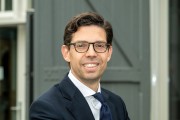
Vincent Triesschijn Vincent Triesschijn is Head of Sustainable Investment at ABN AMRO and focuses on integrating sustainability into investment decisions, engagement and regulatory matters. He previously worked at UBS, J.P. Morgan and Van Lanschot Kempen. He holds a Master’s degree in Sustainability from the University of Cambridge and advises sustainable start-ups. Under his leadership, sustainable investment at ABN AMRO grew significantly and the bank won several European awards. |
|
Eszter Vitorino Eszter Vitorino is Impact Lead at Van Lanschot Kempen Investment Management. She works at the intersection of capital, sustainability and systemic change, and translates complex impact issues into clear insights on how investments can contribute to measurable social and environmental outcomes. |

|
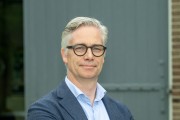
Boris van Warmerdam Boris van Warmerdam is a Partner at Wonderland Impact Investments, an investment management platform that creates large-scale social and financial value through impact propositions in the fields of land, water, property and infrastructure. Van Warmerdam has over 20 years’ experience in fund and portfolio management, business development, finance and risk. Previously, his roles included co-founding LIFE Europe and serving as Managing Director at Grosvenor. |
Read the report in the digital magazine