
Symbiotics Asset Management: Housing finance in emerging markets

The latest UN-Habitat report highlights a growing global housing deficit, specifically in emerging markets. For investors, housing finance is emerging as a long-term theme shaped by urbanisation, financial inclusion and capital-market development.
By Yannis Berthouzoz, Deputy CEO, Symbiotics Asset Management
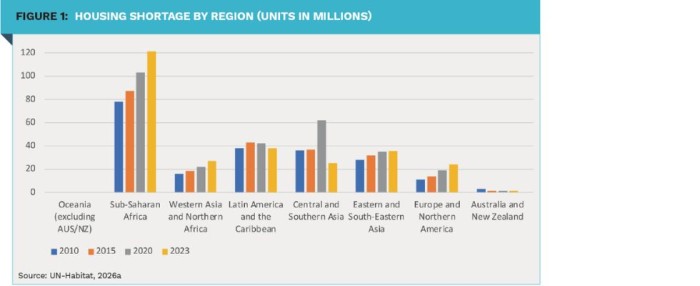
The recently released World Cities Report 2026 by UNHabitat underscores the scale and urgency of the global housing challenge. An estimated 3.4 billion people currently lack access to secure, safe and adequate housing, reflecting a structural imbalance that continues to deepen across both developed and emerging markets. The report also notes that the global housing deficit increased from 251 million units in 2010 to approximately 288 million units in 2023.
Housing is often discussed as a social issue. Increasingly, however, it is also a capital-allocation challenge. Housing is closely linked to access to economic opportunities, labor mobility, financial inclusion and sustainable urban development. The scale of the challenge raises important questions about the role of capital markets in supporting sustainable housing systems and addressing persistent market inefficiencies.
A structural imbalance
Housing demand in emerging markets continues to be supported by longterm demographic and economic trends. Urban populations are expanding rapidly, household formation is increasing and rising incomes are creating demand for better-quality housing. Yet supply has struggled to keep pace.
A large share of households falls within the so-called ‘missing middle’: above the threshold for subsidised housing but below the income level required to access conventional mortgage finance. In this context, affordable housing refers to adequate housing that households can access without housing costs placing an excessive burden on their income. At the same time, many financial systems remain underdeveloped, limiting access to housing-related credit for large segments of the population. Where financing is available, products are not always tailored to the needs of low- and middle-income households, particularly regarding affordability, tenor and repayment structures.
The result is a market in which informal housing solutions remain widespread. In many countries, households build incrementally over long periods, relying on savings, family support or informal borrowing. While such approaches provide flexibility, they often limit housing quality, delay investment and constrain broader economic development. From a capital-markets perspective, this reflects a persistent disconnect between effective housing demand and the availability of appropriate financing mechanisms.
Scale of investment required
The magnitude of the challenge is considerable. According to a widely cited estimate from the McKinsey Global Institute, addressing global housing needs could require up to USD 16 trillion in total construction costs. Importantly, this figure refers to the estimated cost of building adequate housing rather than a specific financing gap. More recent estimates suggest that annual financing requirements for housing systems may amount to USD 3-4 trillion per year through 2030. The conclusion is clear: the housing sector requires significantly greater levels of investment than are currently available. These figures illustrate why affordable housing is increasingly relevant to investors.
From real estate to credit markets
A key shift in the debate is the transition from viewing housing primarily as a real-estate issue towards understanding it as a challenge of credit access and financial-system development. For investors, affordable housing is often better understood as a credit-From real estate to credit markets A key shift in the debate is the transition from viewing housing primarily as a real-estate issue towards understanding it as a challenge of credit access and financial-system development. For investors, affordable housing is often better understood as a credit-market opportunity than a real-estate proposition. The challenge therefore extends beyond the construction of individual homes to the limited availability of financing mechanisms that enable households to access, improve or build them. Building additional housing units does not by itself address the underlying constraints. Housing outcomes also depend on savings products, housing loans and long-term funding channels. Sustainable progress depends on the development of housing-finance ecosystems, including housing microfinance, mortgage-market expansion, institutional lending capacity and risksharing mechanisms. Housing outcomes depend not only on land, construction and infrastructure, but also on the availability of savings products, housing loans and long-term funding channels adapted to the needs of low- and middle-income households. In many emerging markets, these financing mechanisms remain at an early stage of development. Financial institutions play a key role in channeling private capital towards local housing needs through appropriate product design, underwriting and portfolio monitoring.
Adding impact: green housing, climate resilience and inclusion
Housing finance also influences outcomes well beyond housing access itself. The World Cities Report 2026 highlights housing as both a significant source of emissions and a frontline asset exposed to climate risks. Buildings account for roughly 37% of global CO₂ emissions, while housing alone is estimated to generate 17-21% of total emissions. These challenges also create an opportunity to develop dedicated green housing finance products that enable households to invest in more energyefficient, resilient and lower-carbon homes. Financing can support improvements such as insulation, more efficient heating and cooling, renewable energy solutions and climate-resilient renovations. By making these investments accessible to low- and middle-income households, affordable housing finance can contribute to both climate mitigation and adaptation while improving living conditions. Energy efficiency can contribute not only to lower emissions, but also to housing affordability by reducing recurring household energy costs.
For investors, affordable housing is often better understood as a creditmarket opportunity than a real-estate proposition
Investment dynamics and portfolio relevance
For investors, affordable housing in emerging markets presents a number of distinctive characteristics. First, demand is supported by structural drivers such as urbanisation, demographics and rising incomes. Second, many markets remain underserved, creating opportunities for capital deployment where financing needs exceed available supply. Third, investments are linked primarily to local economic activity and household cash flows, providing exposure to trends that differ from those driving many traditional asset classes. As housing is a major household financial commitment, wellstructured housing loans can support strong borrower engagement and resilient repayment behavior. These characteristics must be assessed within the broader context of regulatory frameworks, underwriting standards, currency risks and institutional capacity. As with any emerging-market strategy, outcomes depend heavily on local market conditions and execution. Nevertheless, as governments, development institutions and private investors seek scalable responses to the housing challenge, financing mechanisms are likely to play an increasingly important role in shaping future housing markets.
Conclusion: housing is a structural theme
Affordable housing finance offers investors a way to participate in the long-term development of emerging markets while supporting financial inclusion and improved housing outcomes, including more energyefficient and climate-resilient homes. The opportunity lies not simply in financing more housing, but in supporting the financial systems and products that can make adequate housing accessible to a broader share of the population.
|
SUMMARY Housing demand in emerging markets remains strong, driven by urbanisation, demographics and economic growth. Access to suitable housing finance remains limited for many low- and middleincome households. Affordable housing finance combines exposure to emerging-market growth with financial inclusion and improved housing access. Green housing finance supports more energyefficient and climateresilient homes. |