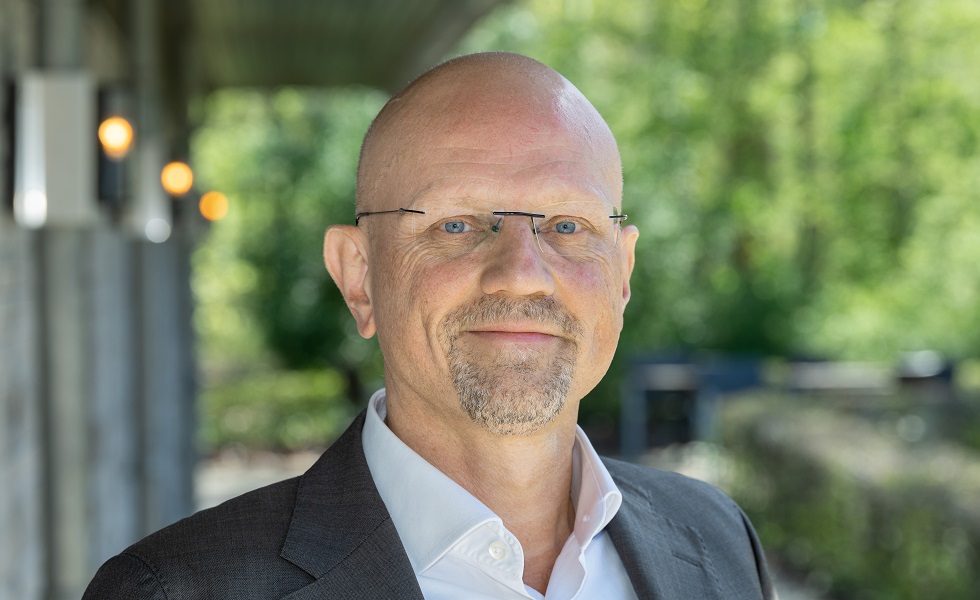
Harry Geels: Social entrepreneurship with other people’s money
This column was originally written in Dutch. This is an English translation.
By Harry Geels
Citing all manner of ‘crises’ and ‘inequalities’, large companies in particular are now expected to do much more than simply make a profit: ESG, diversity targets, climate policy and social impact. That sounds more straightforward than it actually is.
In 1970, Milton Friedman published his famous essay The Social Responsibility of Business Is to Increase Its Profits. The title sounds harsher than his argument actually is. Friedman did not argue that entrepreneurs should have no conscience or that shareholders should be interested solely in money. His real question was more fundamental: who decides which social goals a company should pursue? After all, social policy does not come free of charge. Large corporations now have entire sustainability departments and also hire external consultants at great expense. Ultimately, this has to be paid for.
Suppose a company spends 100 million euros on a social cause, without any comparable economic benefit in return. Who, then, pays that 100 million? According to Friedman, there are ultimately only three possibilities: the shareholders pay through lower profits, the employees pay through lower wages, or the consumers pay through higher prices. That may seem almost trite, but it touches on something that is easily forgotten in discussions about corporate social responsibility. A company does not pay; people do.
Who has the mandate?
Suppose the sole owner of a company decides to spend 20 per cent of his profits each year on nature restoration. No problem, Friedman would say. It is his company and his money. The same applies when shareholders collectively decide to sacrifice part of their returns for social objectives. Friedman writes that directors must manage the company in accordance with the wishes of the owners.
In most cases, they will want to maximise returns, but according to him, that need not necessarily be their sole objective. Things become more complicated when management itself determines which social cause is important and how much money should be spent on it. The director then determines not only which social problems deserve priority, but also, indirectly, what shareholders, employees or consumers must contribute towards them. The fundamental question is then no longer whether the goal is noble, but who has the mandate to make others pay for it.
Why should a director consider climate action more important than tackling poverty, diversity more important than lower consumer prices, or an inclusion programme for disadvantaged young people more important than a higher return for investors? There are undoubtedly sound arguments for each of these choices, but they remain a matter of balancing different interests and values. This essentially gives them political dimensions. After all, the director determines not only what is socially desirable, but also who pays for it. In doing so, they take on a role for which politicians must at least still obtain a democratic mandate.
When ESG is simply good business practice
Not everything that is currently categorised under ESG comes at the expense of profit, incidentally. A company that saves energy, treats its employees better to reduce staff turnover, combats corruption or minimises risks in the supply chain may, in fact, benefit financially as a result. You don’t actually need any social theory or SDGs for that at all. If ESG boosts returns, it need not be defended as a social objective. It is simply good business practice. The question of mandate only becomes truly interesting when interests begin to diverge.
Market power, for example in oligopolies, makes that question even more interesting. A company in a highly competitive market can hardly pass on additional costs. A company with significant pricing power, however, can pass on part of those costs to its customers. It is precisely large companies with significant market power that can therefore more easily afford to pursue social policies for which others may end up footing the bill. Competition therefore disciplines not only prices, but also managers’ ability to pursue their social preferences at the expense of others.
There is an important counter-argument. A corporation can maximise profits whilst a portion of its actual costs is borne by society. Consider, for example, pollution or CO₂ emissions. This poses a serious problem for an overly simplistic view of profit maximisation. The existence of such externalities proves that societal corrections may be necessary, but not that individual directors should themselves determine the extent of that correction or who should pay for it. Friedman placed that responsibility primarily with politicians. If CO₂ emissions cause harm to society, politicians can, for example, impose a price on those emissions or regulate them. Companies then compete within the same democratically established rules.
From CEO to pension fund
Moreover, something fundamental has changed since Friedman wrote his essay. Nowadays, there are often several intermediaries between the owner and the company: a pension fund investing on behalf of its members, or an asset manager acting on behalf of its clients. This makes the question of mandate more pressing rather than less so. When an individual decides personally to invest exclusively in sustainable options and, if necessary, to sacrifice financial returns for that purpose, there is little issue. It is their money. But how does this work with collective assets?
Who decides, on behalf of millions of pension scheme members, which social objectives are to be pursued with their assets? How much return might need to be sacrificed to achieve this? And what if scheme members have fundamentally different social preferences? These are not arguments against sustainable investment, but questions about legitimacy and mandate.
Friedman’s forgotten question
Friedman wrote his essay over half a century ago. Since then, we have become much more aware of externalities, climate risks and the social impact of large corporations. The world has changed, but this has not made Friedman’s key question any less relevant. As soon as company directors or institutional investors independently pursue social objectives using money belonging to shareholders, employees, consumers or pension scheme members, one question becomes unavoidable: who actually gave them the mandate to do so?
This raises a second question. If directors pursue social objectives, they should also be transparent about what those objectives cost – or, conversely, deliver – to shareholders, employees and customers. Only then can the people on whose behalf they act assess the situation and perhaps comment on whether a mandate is justified. I believe this is, in fact, the crux of the discussion. Directors are certainly entitled to have a social conscience. But a social conscience does not give you the right to dispose of other people’s money without a mandate.
This article contains a personal opinion by Harry Geels