
Latest issue of Financial Investigator now online
This preface was originally written in Dutch. This is an English translation.
Discipline makes all the difference
The global economy is holding up, but the interest rate environment has changed significantly. The conflict in the Middle East has driven up energy prices and reignited inflationary pressures. The US ten-year yield is at its highest level in nearly a quarter of a century, although inflation expectations have remained remarkably stable. Fixed-income securities are once again offering real returns, but funding costs are also structurally higher.
Closer to home, the situation in France is a cause for concern. The French ten-year yield rose above 5% in October, its highest level since 2002. The yield spread relative to Germany has reached its highest level since the euro crisis. A budget deficit of over 5 per cent and public debt of nearly 120 per cent of GDP make fiscal consolidation essential. However, a government without a majority, unrest on the streets and presidential elections in the spring are making that consolidation difficult. It shows just how quickly political uncertainty translates into higher borrowing costs.
It is precisely in this environment that private debt – the theme of this edition – becomes interesting. During our round-table discussion on private credit, it emerged that the asset class is no longer an opportunistic investment, but a permanent allocation centred on predictable income and capital preservation. This requires discipline. The participants highlighted a gradual erosion of covenants and called for greater transparency and common standards.
This was also a central theme during the panel discussion on private debt. The underlying market is healthy, but semi-liquid structures for retail investors sometimes promise more liquidity than the loans can actually provide.
At the round table on infrastructure debt, it emerged that the inflow of capital is putting downward pressure on spreads, particularly for large, popular projects. Smaller and more complex transactions offer greater scope, provided managers remain selective.
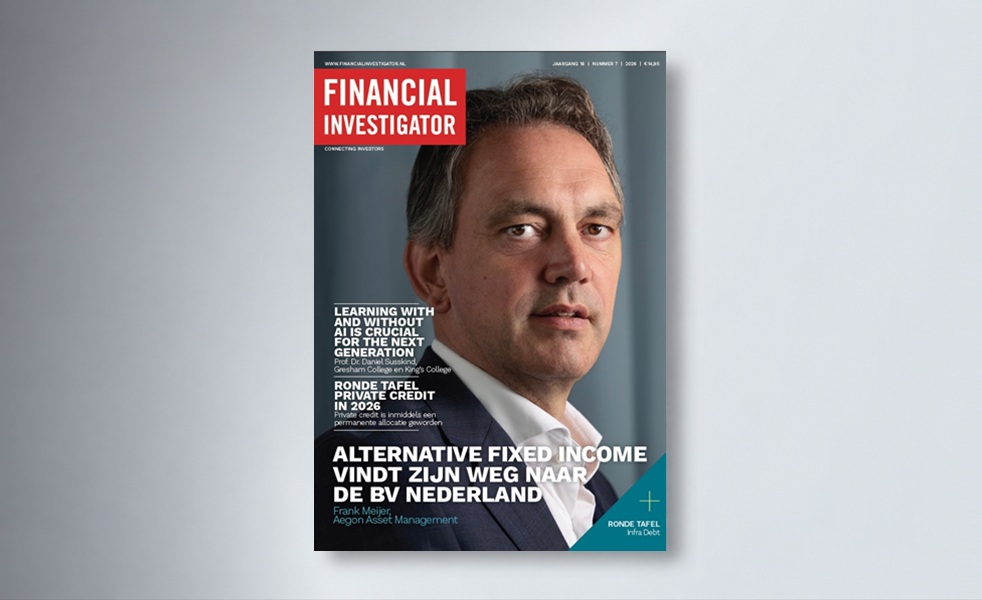
What is striking is the growing interest in investing in one’s own backyard. In our cover interview, Frank Meijer of Aegon Asset Management explains why alternative fixed income is finding its way into the Dutch market. Geopolitics, the WTP and the desire to make an impact close to home all converge here. Alongside banks, pension funds and insurers can play a key role in financing SMEs and smaller mid-caps.
The common thread running through this issue is that success in private markets does not depend on how much capital you put to work. It depends on which deals you close and which you walk away from. In a time of higher interest rates and greater uncertainty, credit discipline is not a hindrance to returns, but rather the very foundation of them.
Enjoy reading!
Jolanda de Groot, Editor-in-Chief
Read the complete magazine online